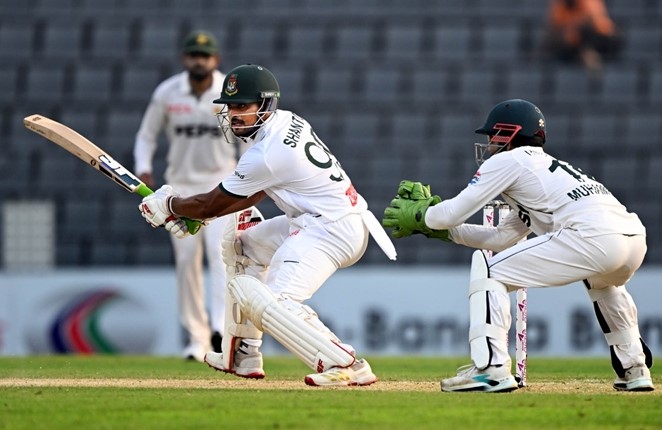
Babar Azam Reflects on Pakistan’s Batting Struggles Against Bangladesh

Contents
A Tactical Assessment of the Sylhet Collapse
In the wake of a disheartening batting display during the Sylhet Test, Babar Azam has provided a candid assessment of Pakistan’s performance. Despite the narrative surrounding Bangladesh’s recent rise in Test cricket, the former captain remains firm in his belief that the batting unit’s failures were self-inflicted rather than a result of the opposition’s bowling prowess.
The Narrative of Soft Wickets
Pakistan found themselves in a difficult position after posting a first-innings total of 232, trailing Bangladesh by 46 runs. While the host nation’s bowlers were disciplined, Babar Azam was quick to downplay the idea that they were unplayable. Speaking to the media, he noted that the primary issue was the frequency with which his teammates gave away their wickets through poor shot selection.
As the lone half-centurion for Pakistan, scoring a resilient 68, Babar was in a unique position to observe the pitch conditions firsthand. Contrary to any suggestions that the track was overly difficult, he maintained that the surface in Sylhet was favorable for batting.
The Importance of Partnership Building
Babar highlighted that the wicket allowed the ball to come onto the bat nicely, providing ample opportunity for big scores. He pinpointed a recurring theme in Pakistan’s recent Test efforts: the inability to form substantial, match-defining partnerships. “The wicket is very good,” Babar remarked. “We just failed to build partnerships. We had a decent start, and Salman and I were trying to build a partnership, but it didn’t become a big one.”
According to the star batter, the momentum of the game shifted drastically following the dismissals of himself and Salman Ali Agha. These two wickets were identified as the turning point that prevented Pakistan from clawing their way back into a dominant position. Without these crucial middle-order stands, the lower order was left with too much to do, leading to a swift decline.
Refuting the Mental Block Theory
With Pakistan facing the threat of losing four consecutive Tests against Bangladesh, some critics have speculated about a psychological barrier—or a ‘mental block’—when facing the Tigers. However, Babar Azam firmly rejected this notion. He argued that international sides are well-acquainted with one another and that these struggles are purely technical and tactical rather than rooted in fear or pressure.
“No, both teams have played against each other many times,” he explained. “I don’t think there’s any mental barrier. The problem is that our partnerships are too small. In Test cricket, you need two or three big partnerships to do well.”
Looking Ahead: The Need for Consistency
The challenge for Pakistan moving forward is clear: consistency in the middle. While individual brilliance—such as Babar’s own half-century—can provide a glimpse of success, the nature of the longest format demands discipline and the patience to survive long spells. As the series progresses, the Pakistan team management will likely focus on reinforcing the importance of patience and building an innings that can withstand the pressure of a five-day game.
The Sylhet Test serves as a sobering reminder that regardless of the opposition’s form, the foundation of Test success remains the same: holding one’s ground and constructing the big partnerships that define the outcome of the match. For Babar and his team, the path back to winning ways lies in rectifying the errors made during this recent collapse and finding the fortitude to convert starts into massive totals.