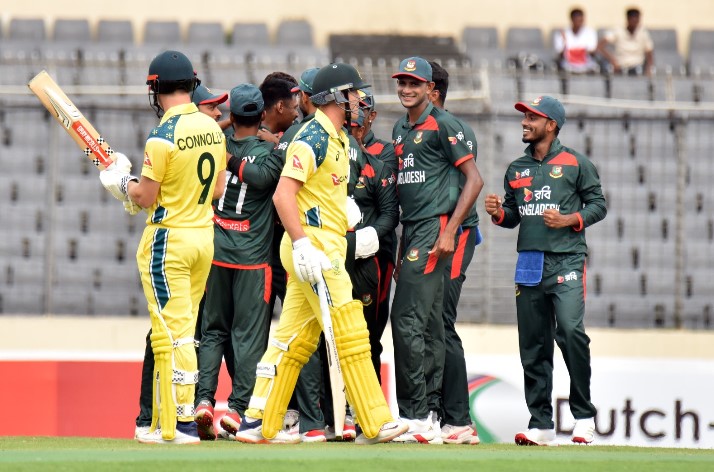
Taijul Islam Reveals On-Field Exchange with Shan Masood in Sylhet Test
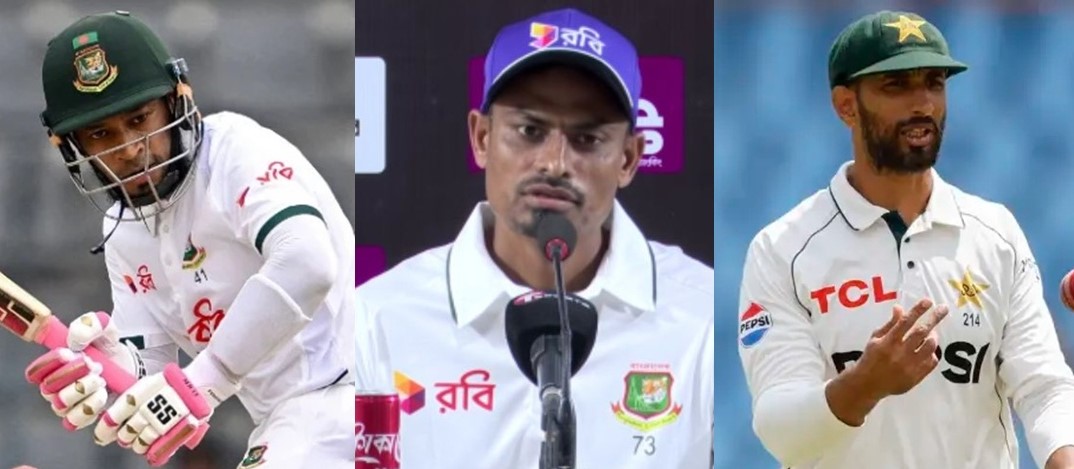
Mushfiqur Rahim crafted a masterful century as Bangladesh seized control of the Sylhet Test, setting Pakistan an uphill target of 437 runs to win. Achieving it would require a world-record chase. Bangladesh posted 390 in their second innings, powered by Mushfiqur’s composed 100 and crucial support from the lower order, notably Taijul Islam.
Mushfiqur’s Masterclass and Lower-Order Resolve
On Day 3 of the Test, Mushfiqur delivered a technically sound and determined performance, anchoring the innings with vital partnerships. His 77-run stand with Taijul Islam not only shifted the game’s momentum but also exposed Pakistan’s growing frustration in the field.
During that partnership, a brief but intense on-field exchange took place between Taijul and Pakistan captain Shan Masood. With the visitors having fielded for long stretches under scorching conditions, tensions flared — and the moment didn’t go unnoticed.
Taijul Breaks Silence on On-Field Tension
After play concluded, Taijul reflected on the incident with characteristic calm. He explained, “When you are in a match, many things can happen. They had been fielding for a long time, so maybe they lost a bit of temper. Mushfiqur bhai didn’t say anything. He was just talking normally with the umpire. I’m not sure what they understood, but they reacted in their own way.”
The comments suggest the situation may have been misinterpreted by the Pakistani players, with Mushfiqur’s routine conversation with the umpire possibly seen as provocative.
Battling the Banter: Taijul Responds to Sledging
Taijul also addressed verbal exchanges he had with Pakistan’s Saud Shakeel, who reportedly urged him to come out and bat. Taijul recalled, “What happened with me was – he told me to come and bat. But that’s not his job, it’s my job.” The remark, intended to rattle, instead seemed to fuel the Bangladeshi all-rounder’s focus.
His response was swift and symbolic — Taijul struck a boundary soon after. When asked if it was a message back, he said with a smile, “When you go out to bat, these things happen… and the ball was there to be hit.”
Team Effort Over Individual Glory
Taijul’s 22 runs may seem modest on the scorecard, but in the context of the match, they were invaluable. His partnership with Mushfiqur helped Bangladesh build a lead that now threatens to seal the game. This wasn’t a one-off — in the first innings, he had also supported Litton Das during a key lower-order stand.
With both Litton and Mushfiqur notching centuries, Taijul emphasized the collective mindset driving the team. “Earlier, there were some gaps in our lower-order contributions, so questions were raised. Now everyone is more serious. The coaching staff and players are very committed. If we can contribute even a little, it helps the team. It also helps us individually. If I can score 20-30 runs along with my bowling, that becomes a big advantage.”
His words highlight a pivotal shift in Bangladesh’s approach — no longer relying solely on top-order brilliance, but building resilience across the lineup.
Looking Ahead
With a 437-run target, Pakistan face a near-impossible task. Bangladesh, on the other hand, are riding high on confidence, discipline, and an emerging culture of accountability. Taijul’s calm under pressure and the team’s refusal to be rattled — either by sledging or high stakes — signal a new chapter in their Test journey.
As fans await the final day’s outcome, one thing is clear: Bangladesh aren’t just playing for runs. They’re playing for pride, unity, and a statement that their lower order is no longer a weakness — but a weapon.