‘She’s been threatening for a long time’ – Australia’s depth delivers as Wareham shines at T20 World Cup
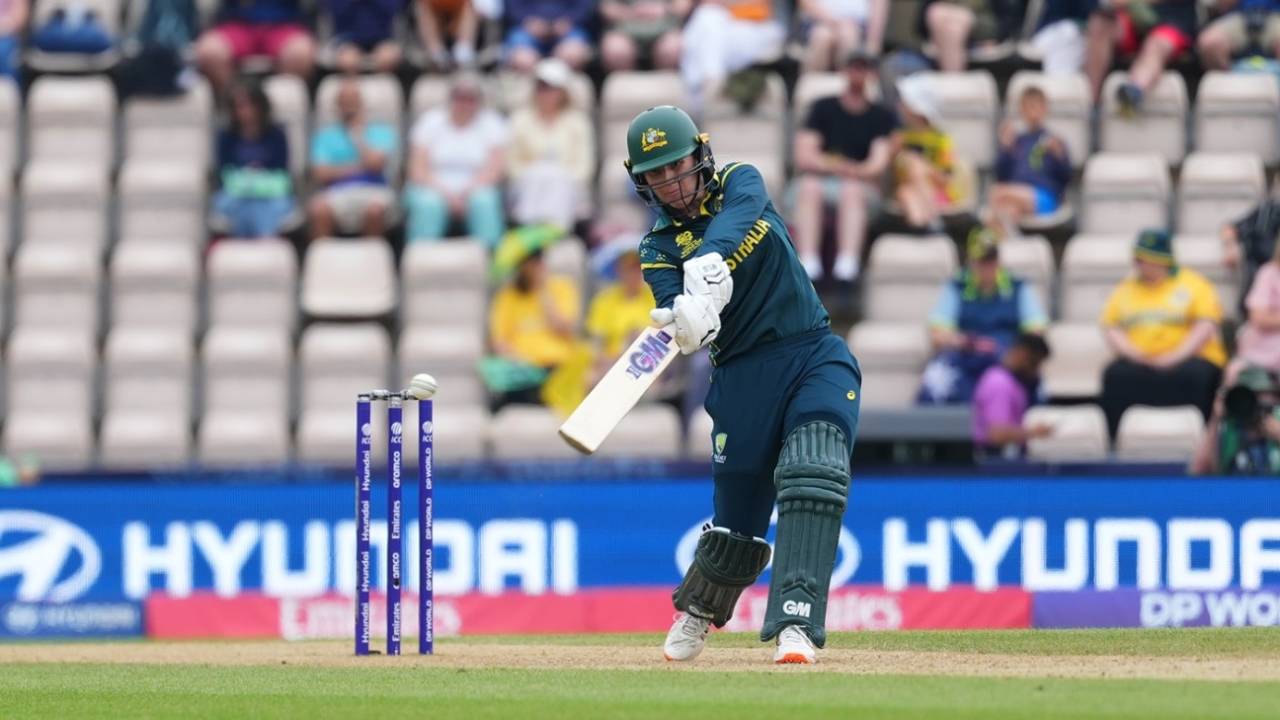
The T20 World Cup continues to showcase the formidable strength of the Australian women’s cricket team, whose enviable depth has been a defining feature, providing a powerful platform for the latter stages of the tournament. The statement, “‘She’s been threatening for a long time’ – Australia’s depth delivers as Wareham,” perfectly encapsulates the team’s ability to call upon various match-winners, with all-rounder Georgia Wareham leading the charge with her exceptional performances.
Wareham’s Ascent: A Star Unleashed
Georgia Wareham has emerged as a pivotal figure in Australia’s middle order throughout this T20 World Cup campaign. Her boundary-laden 32 runs in the opening match victory against South Africa, where she also claimed an impressive 3 for 13 with the ball, set an emphatic tone for her tournament. She followed this up with an explosive 41 runs off just 18 deliveries against the Netherlands, further cementing her impact. These blistering performances have elevated her to Australia’s second-highest run-scorer in the tournament, trailing only the prolific Beth Mooney.
Wareham’s current form is not an anomaly but a continuation of her stellar run of performances over the past year. She was notably named Player of the Tournament in the last Women’s Big Bash League (WBBL) season. Playing for the Melbourne Renegades, she topped the wicket-takers’ list with 19 wickets at an impressive average of 10.94 and a miserly economy of 5.47. Her batting was equally impactful, as she scored 277 runs in the middle order at an average of 39.57 and a remarkable strike rate of 147.34. Furthermore, she enjoyed a successful One Day International (ODI) series in the Caribbean in March, earning two Player-of-the-Match awards and showcasing a superior strike rate, all underlining her consistent and significant all-round development.
Australia’s Depth in Action: Navigating Challenges
Australia’s head coach, Shelley Nitschke, has publicly acknowledged Wareham’s long-anticipated rise. “I don’t think [it’s] probably surprising to any of us that see Wolfie [Wareham] go about her work day in, day out,” Nitschke stated. “She’s probably been threatening with the bat for a long time. We all know what she’s capable of. She’s had a really good 12 months and was excellent again [against Netherlands]. She’s playing a really critical role there for us through the middle.”
This celebrated depth has proven crucial, as the team has faced minor setbacks during the tournament. Phoebe Litchfield, for instance, missed the commanding 98-run demolition of the Netherlands due to a quad injury and is expected to sit out the upcoming game against Pakistan. Yet, the team seamlessly adjusted, with Georgia Voll competently taking on wicket-keeping duties when Beth Mooney experienced some tightness in her back. Ash Gardner also showcased her resilience, bouncing back with a crucial half-century after missing a previous match due to a sprained ankle. Coach Nitschke underscored the significance of this collective strength: “We always talk about our depth, and I think we’ve had to test that a little bit at times, and it’s been really good to see people step up and have a winning innings or just take control of the game as well.”
Managing Injuries and a Gruelling Schedule
The rigorous travel schedule at this World Cup has presented additional challenges for the Australian squad. Their itinerary has been particularly demanding, commencing in Manchester, moving to Leeds, then traversing the entire country to Southampton, and finally returning to Leeds by coach. This extensive time spent on the road has even been cited by Beth Mooney as a contributing factor to her back soreness, which led to her precautionary retirement at 74 runs against the Netherlands. Prioritizing player well-being, the team management made a strategic decision.
“We know how important she is to us and just when she started getting some tightness in her back, it wasn’t worth risking her,” Nitschke explained. “She plays a big role for us with the gloves as well, so there is an element of precaution at times. In a World Cup you’ve just got to weigh everything up and work out what’s worth the risk and what’s not worth the risk.” With three consecutive wins from three matches and a crucial final group-stage encounter against India at Lord’s approaching, Australia is in a strong position to carefully manage their resources and take calculated risks, ensuring their key players are fit and firing for the knockout stages.
Looking Ahead: The Pakistan Challenge and Fatima Sana’s Threat
In stark contrast to Australia’s commanding position, their next opponents, Pakistan, are grappling with significant struggles. They are yet to secure a victory in the tournament, having suffered defeats against India, Bangladesh, and South Africa. Despite their team’s overall performance, Pakistan has found a beacon of hope in the formidable all-rounder Fatima Sana. Sana delivered a remarkable individual effort against South Africa, scoring an unbeaten 55 off 38 balls and taking 3 for 16 in 2.5 overs, sending a genuine scare through the Proteas camp before Marizanne Kapp’s all-round performance eventually secured a two-wicket victory for South Africa.
Australia’s coaching staff is well aware of Sana’s threat and her ability to turn a game. “She’s been outstanding,” Nitschke remarked. “Since she’s stepped into the captaincy role, she’s really grown as an allrounder and one of the world’s best at T20 cricket. We haven’t had a chance to get our plans ready. We’ve got a five-hour bus trip, so there’s a bit of an opportunity for us to have a look at that. But we certainly know that she’s the sort of player we need to be well planned for and be able to execute against her because she’s showing that she can take a game away from a team.”
Pakistan’s Internal Analysis: A Quest for Rectification
Following their latest defeat to Bangladesh, Pakistan’s coach Wahab Riaz candidly lamented that his side had “defeated themselves.” This sentiment arose after a dramatic collapse from 70 for 2 in the 12th over to a paltry 100 for 8 while chasing 124, effectively ruining their already slim chances of progressing to the knockout stages. On the eve of their challenging encounter with Australia, Pakistan opener Muneeba Ali expressed her team’s determination to “rectify the mistakes we have been making in the last three games.”
She recalled their previous encounter with Australia at last year’s 50-over World Cup, where they were reduced to 76 for 7 before ultimately losing by 107 runs, being bowled out for 114 while chasing 222. Muneeba reflected on the crucial lessons learned from their recent loss to Bangladesh, stating, “When I was settled in, I should probably have finished that match, but unfortunately when wickets fall we have a cluster of wickets in the last three games. That is the main thing we need to rectify and identify what we were doing in those situations. Are we not taking good, right decisions mentally in those pressure times? That is what we have talked about and we will try to rectify.” Pakistan faces a formidable task against the in-form Australians, but their commitment to addressing their shortcomings offers a glimmer of hope for an improved and more cohesive performance.