Crucial Clash: Munisar in as West Indies bowl vs Sri Lanka in Group 2 Encounter
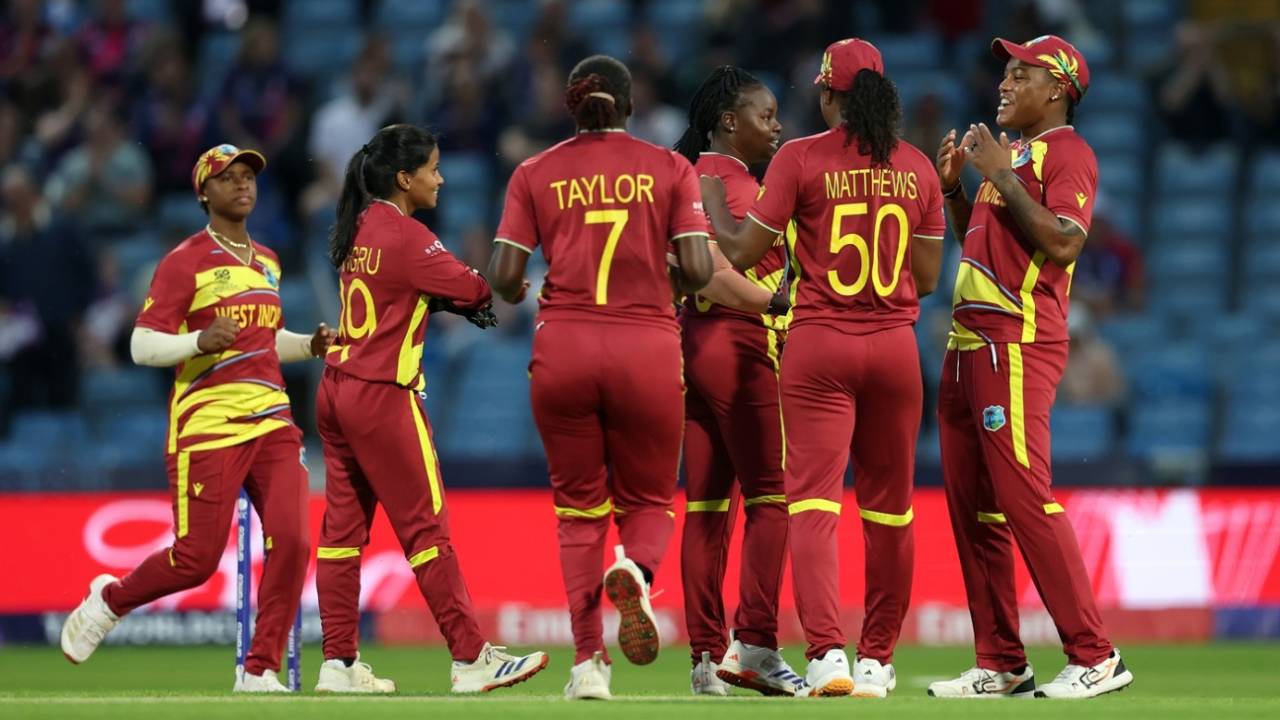
The cricketing world turns its attention to Bristol, where a crucial Group 2 fixture between the West Indies and Sri Lanka is set to unfold. In a move that sets the strategic tone for the match, West Indies captain Hayley Matthews won the toss and elected to put Sri Lanka into bat first. This decision, especially with Ashmini Munisar bolstering the spin department, immediately signifies the West Indies’ intent to exploit early conditions and their strong belief in their bowling unit’s capabilities.
High Stakes for Both Sides in Bristol Battle
For the West Indies, this encounter presents a significant opportunity to further consolidate their already formidable position in Group 2. An emphatic victory here would not only extend their impressive unbeaten record in the tournament but also provide a crucial psychological advantage heading into the later stages. Their consistent performance thus far has established them as strong contenders, and maintaining this momentum is paramount.
Conversely, for Sri Lanka, this match carries immense weight following their recent historic triumph against New Zealand. That morale-boosting win has injected new life into their campaign, and another victory here would be transformative. It would see them draw level on four points with the West Indies, effectively throwing Group 2 wide open and intensifying the competition for qualification spots. The pressure is palpable for both teams, with every run and every wicket potentially altering the group’s landscape.
Captains’ Strategic Insights on the Toss
West Indies captain Hayley Matthews elucidated her decision at the toss, stating her team’s intention to exploit any early assistance that the surface might offer. This tactical approach is common in T20 cricket, particularly when there’s a perceived chance of early swing or seam movement, or if the pitch is expected to slow down later in the innings, making batting easier. Matthews’ confidence in her bowlers to make early inroads underscores her leadership and understanding of the conditions.
Sri Lanka’s captain, Chamari Athapaththu, expressed a clear preference, confirming that her side would have “definitely” chosen to bat first had they won the toss. This indicates a contrasting philosophy, possibly aiming to set a challenging total and put pressure on the opposition in the chase, or perhaps believing the pitch would become harder for batting as the game progressed. The differing strategies at play add an intriguing layer to this contest.
Key Team Changes and Their Impact
Both teams have opted for a solitary change to their respective playing XIs, each modification carrying specific strategic implications. For the West Indies, the inclusion of Ashmini Munisar is a significant tactical adjustment. Munisar, a promising spinner, comes in for Qiana Joseph, thereby strengthening the West Indies’ spin bowling stocks. This decision aligns perfectly with the prevailing expectation that spin will play a crucial role on the Bristol pitch. The move suggests a proactive approach to leverage the conditions and enhance their wicket-taking options through the middle overs, where spinners often thrive.
On the Sri Lankan side, the top-order batter Imesha Dulani makes a return to the XI, replacing Hasini Perera. Dulani’s re-entry is likely aimed at bolstering their batting lineup, particularly at the top, to provide stability and impetus. Given Sri Lanka’s desire to post a competitive total after being put in to bat, the emphasis on a specialist top-order batter like Dulani makes strategic sense. Her ability to anchor an innings or accelerate when needed will be vital for Sri Lanka’s aspirations.
Recent Head-to-Head and Bristol Conditions
While the West Indies enter this match in strong form, the recent head-to-head record between these two nations paints a different picture. Sri Lanka has held the upper hand in their last two encounters, securing victories in both matches. This historical context could provide Sri Lanka with a psychological edge, reminding them of their capability to overcome their opponents. However, Hayley Matthews remains unfazed by this statistic, confidently asserting that the specific conditions at Bristol are expected to suit her side more. This suggests that the West Indies are banking on their specific skill sets, perhaps their potent pace attack or versatile spin options, to perform optimally in the local environment.
Pitch Report: Spin Expected to Dominate
The pitch at Bristol has been a focal point of discussion leading up to this match. Reports indicate a good layering of grass, which might initially suggest assistance for fast bowlers. However, the crucial detail is that the pitch is also described as being “slightly damp.” This combination often leads to a surface that starts with some pace and bounce but tends to slow down and offer considerable grip and turn for spinners as the match progresses. This dampness, in particular, could make the ball hold up, proving challenging for batters attempting to drive through the line.
Consequently, spin is not just expected to play a role but is anticipated to be a major factor in determining the outcome of this game. Both teams possess quality spin options, and their ability to exploit the conditions will be paramount. The boundary dimensions—60 metres square on either side and 70 metres down the ground—also influence batting strategies. While not exceptionally large, they require precise hitting and intelligent placement, further emphasizing the need for disciplined bowling, especially from spinners who can vary their pace and trajectory effectively.
West Indies XI and Strategy: A Spin-Heavy Approach
The West Indies’ playing XI, with Hayley Matthews at the helm, features a strong batting core complemented by a diverse bowling attack. The batting prowess of Hayley Matthews, Deandra Dottin, Shemaine Campbelle, and Stafanie Taylor provides a robust foundation. With Munisar’s inclusion, their spin attack, which also includes Afy Fletcher and Karishma Rahmarack, appears formidable. The decision to bowl first indicates their confidence in restricting Sri Lanka to a manageable total, utilizing their spinners to control the middle overs and their pacers for early breakthroughs and death bowling.
- Hayley Matthews (Captain)
- Deandra Dottin
- Shemaine Campbelle
- Stafanie Taylor
- Jahzara Claxton
- Chinelle Henry
- Jannillea Glasgow
- Aaliyah Alleyne
- Afy Fletcher
- Karishma Rahmarack
- Ashmini Munisar
Sri Lanka XI and Strategy: Batting for a Strong Total
Sri Lanka, led by Chamari Athapaththu, will be looking to their top order, now bolstered by Imesha Dulani, to set a competitive score. Vishmi Gunaratne, Athapaththu herself, and Harshitha Samarawickrama will be key to laying a solid platform. Their bowling attack, featuring bowlers like Sugandika Dasanayaka and Nimasha Meepage, will then need to leverage any assistance from the damp pitch, particularly their spinners, to defend the total. Their strategy will likely revolve around careful accumulation early on, followed by calculated aggression in the latter part of their innings.
- Vishmi Gunaratne
- Chamari Athapaththu (Captain)
- Imesha Dulani
- Harshitha Samarawickrama
- Kaveesha Dilhari
- Nilakshika de Silva
- Kaushini Nuthyangana
- Kawya Kavindi
- Sugandika Dasanayaka
- Nimasha Meepage
- Mithali Ayodhya
As the teams take to the field, the tactical battle promises to be as engaging as the cricketing action itself. The West Indies’ decision to bowl first, accentuated by the addition of Munisar, sets the stage for a compelling contest where spin and strategic acumen are poised to play decisive roles in shaping the Group 2 standings.