Kumar Sangakkara reveals why ECB allowed Jofra Archer to skip Test match for IPL
The Balancing Act Between Franchise Cricket and National Duty
The relationship between the England and Wales Cricket Board (ECB) and the Indian Premier League (IPL) has often been a point of friction within the cricketing world. In the 2026 season, this tension became particularly apparent as players faced tough choices between high-stakes franchise cricket and upcoming national team assignments. While many English stars opted to return home early to focus on national duties, Jofra Archer emerged as a notable exception, choosing to remain with the Rajasthan Royals. This decision sparked significant debate, but as Kumar Sangakkara reveals why ECB allowed Jofra Archer to skip Test match for IPL, a clearer picture of the strategic planning behind the scenes has emerged.
Addressing the Controversy
Archer’s choice to stay in India drew criticism from several former England cricketers who felt national duty should take precedence. However, Rajasthan Royals head coach Kumar Sangakkara has stepped forward to clarify that this was not a unilateral decision made by the player to disregard his international commitments. Following a dominant victory over the Mumbai Indians at the Wankhede Stadium, which secured the Royals a spot in the play-offs, Sangakkara highlighted the communication between the two parties.
“I think it’s a collaborative decision from what I know,” Sangakkara noted. “I don’t want to speak out of turn about things I don’t know with certainty, but I think it was a collaborative decision between the ECB and Jofra.”
Workload Management: The Priority for the ECB
The primary concern surrounding Jofra Archer has always been his physical well-being. Having spent a considerable amount of time on the sidelines due to recurring injuries, Archer is currently at the center of a specialized workload management programme implemented by the ECB. With an upcoming Test series against New Zealand on the horizon, the board is understandably cautious about placing undue stress on their star pacer.
Sangakkara provided insight into why the ECB felt that staying with the IPL franchise might actually be beneficial for the bowler’s long-term fitness. “Talking about his bowling goals, especially in a Test match, it’s very difficult to get your bowling goals up very soon when you are bowling only four overs in a game,” the coach explained. He further emphasized that the ECB recognized the need for Archer to gradually build up his rhythm, stating, “I think that was why the ECB was gracious enough to let him stay and understand that he’ll be fine once he gets his bowling goals up, once he leaves the IPL.”
A Masterclass in Performance
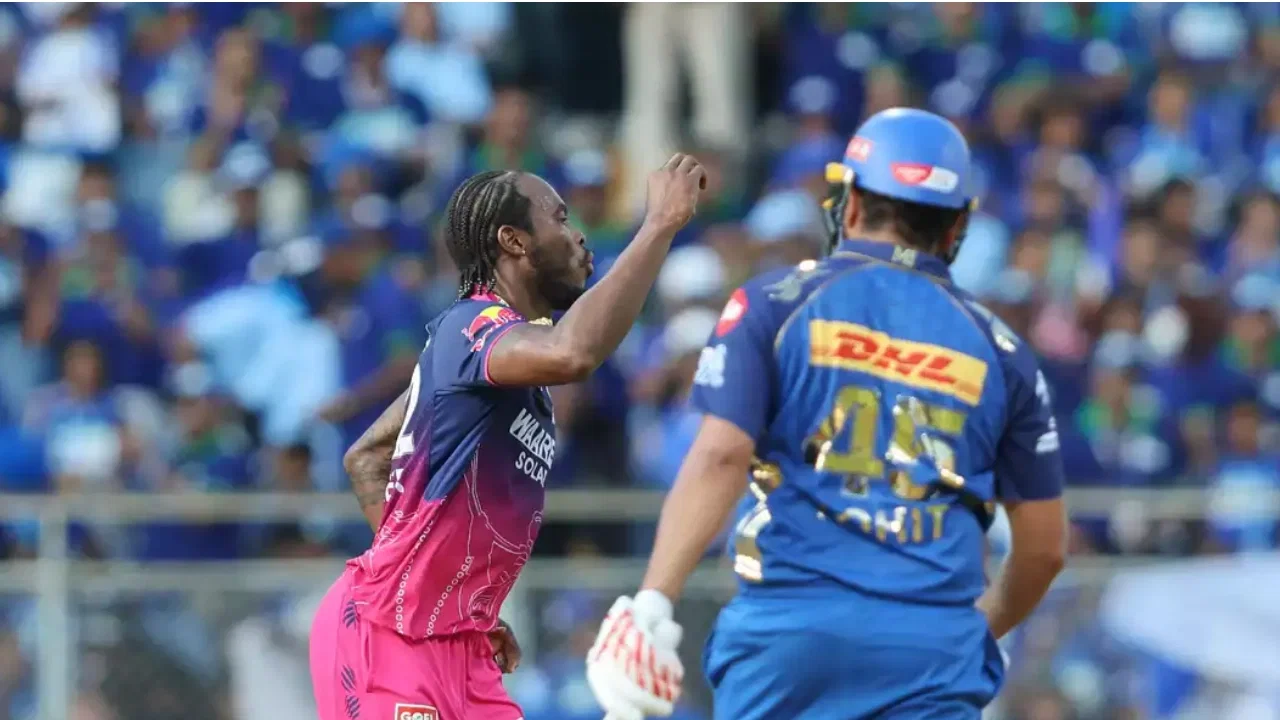
The strategy seems to be yielding immediate results. Archer proved to be the standout performer in the Royals’ clash against the Mumbai Indians. His versatility was on full display as he contributed 32 runs from just 15 balls with the bat, before decimating the opposition lineup with a brilliant 3-wicket haul, conceding a mere 17 runs in his four overs. This match-winning performance earned him the Player of the Match award, reinforcing the argument that he is effectively managing his transition back to full-intensity cricket.
The Road Ahead
Despite the current flexibility, both the Rajasthan Royals and the ECB remain aligned on the ultimate goal: protecting the talent of a generational fast bowler. While Archer remains focused on the IPL play-offs for now, the possibility of his return to England before the final conclusion of the tournament remains a tactical option. This episode serves as a reminder that in modern cricket, managing the physical health of elite athletes requires a sophisticated level of coordination between franchise leagues and national boards, ensuring that stars like Archer are not only available but effective when it matters most for their countries.