Delhi Capitals Struggle at Home: Hemang Badani Criticizes Arun Jaitley Stadium Pitches
A Troubling Trend at Home
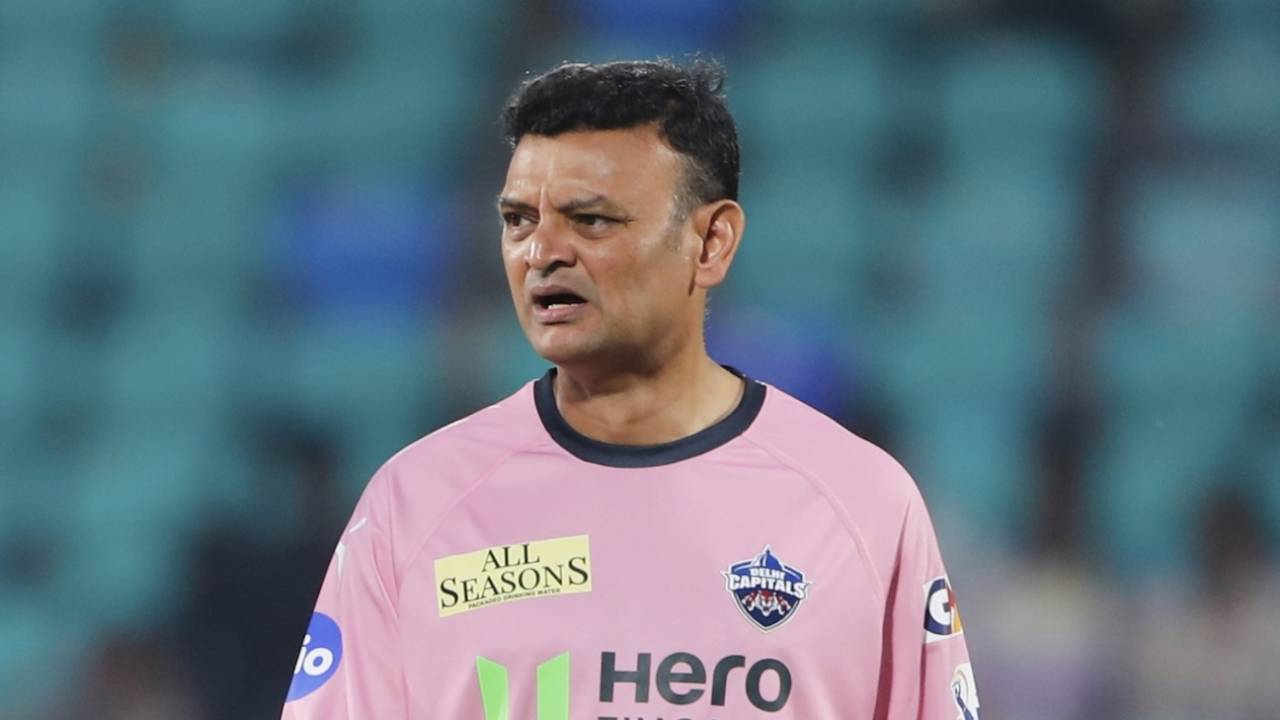
The Delhi Capitals (DC) have endured a challenging campaign in the 2026 Indian Premier League, largely defined by their perplexing inability to master their home turf at the Arun Jaitley Stadium. Following a much-needed victory against the Rajasthan Royals this past Sunday, head coach Hemang Badani did not mince his words regarding the state of the playing surface. For Badani, the strategy has shifted from attempting to dominate at home to treating the venue as an entirely neutral territory.
“We’ve stopped discussing the surface,” Badani stated during the post-match press conference. “As far as I am concerned, we play this venue as an away venue.” This sentiment highlights a deep-seated issue that has plagued the franchise throughout the season, transforming what should be a fortress into a psychological and tactical hurdle.
Statistical Reality and Tactical Disconnect
The numbers paint a stark picture. Delhi has struggled immensely at home, managing only two wins across seven matches, while finding significantly more success on the road with four victories in six games. This disparity is not merely a slump; it is a recurring nightmare. Looking back to the previous season, the Capitals have secured only three wins in 12 matches at this specific venue—one of which required a tense Super Over.
Badani believes the root of the problem lies in the unpredictability of the soil. The pitches have proven to be non-conducive to the team’s natural style of play. “It hasn’t been conducive to our style of play. We’ve many a times not been able to figure out what the surface is like and that’s the reason why you see those results,” he explained.
The Challenge of Inconsistent Preparation
A major point of contention for the coaching staff is the lack of uniformity between different strips at the same stadium. According to Badani, the team has played on three distinct pitches at the Arun Jaitley Stadium this season, each offering a completely different challenge. This inconsistency makes pre-match preparation nearly impossible.
“We are getting bowled out for 60; we are getting bowled out for 150; we are also scoring 260. We don’t know how Pitch No. 4 will play, how Pitch No. 5 will play, how Pitch No. 6 will play,” Badani lamented. “It’s difficult to prepare. When you know this pitch will have a par score of 180, or a par score of 200, or a par score of 250, you structure the side accordingly. But here… whatever is happening is happening.”
Adapting on the Fly
During the recent match against Rajasthan, the pitch conditions shifted significantly as the game progressed. Badani noted that even the opposition struggled to maintain their momentum, collapsing in the latter stages of their innings. “They were 160 for 2 after 14 overs and then they hardly got runs in the end. The same happened to us where we slowed down a little bit but we were cautious because we had a target available to us.”
The ball began to reverse-swing and hold up in the surface, making batting increasingly difficult as it aged. This forced the Capitals to adopt a more conservative approach, focusing on taking the game deep rather than relying on a high-octane assault from the start.
The Bigger Question of Home Advantage
When asked whether IPL franchises should be permitted to curate their own pitches to ensure a genuine home advantage, Badani remained focused on the necessity of transparency and consistency. While he acknowledged the benefits of such a system, he emphasized that the current ambiguity is the greatest threat to fair competition.
“If it has to be a consistent decision for all, then yes, but it should at least be where you know at least what to expect,” he concluded. For now, the Delhi Capitals must continue to navigate the unpredictable nature of their home ground as they fight to keep their playoff aspirations alive in a highly competitive 2026 season.