Arshdeep Singh’s IPL 2026 Struggles: Rayudu on Lengths, Boucher on Fatigue
Arshdeep Singh‘s IPL 2026: A Season of Uncharacteristic Struggles
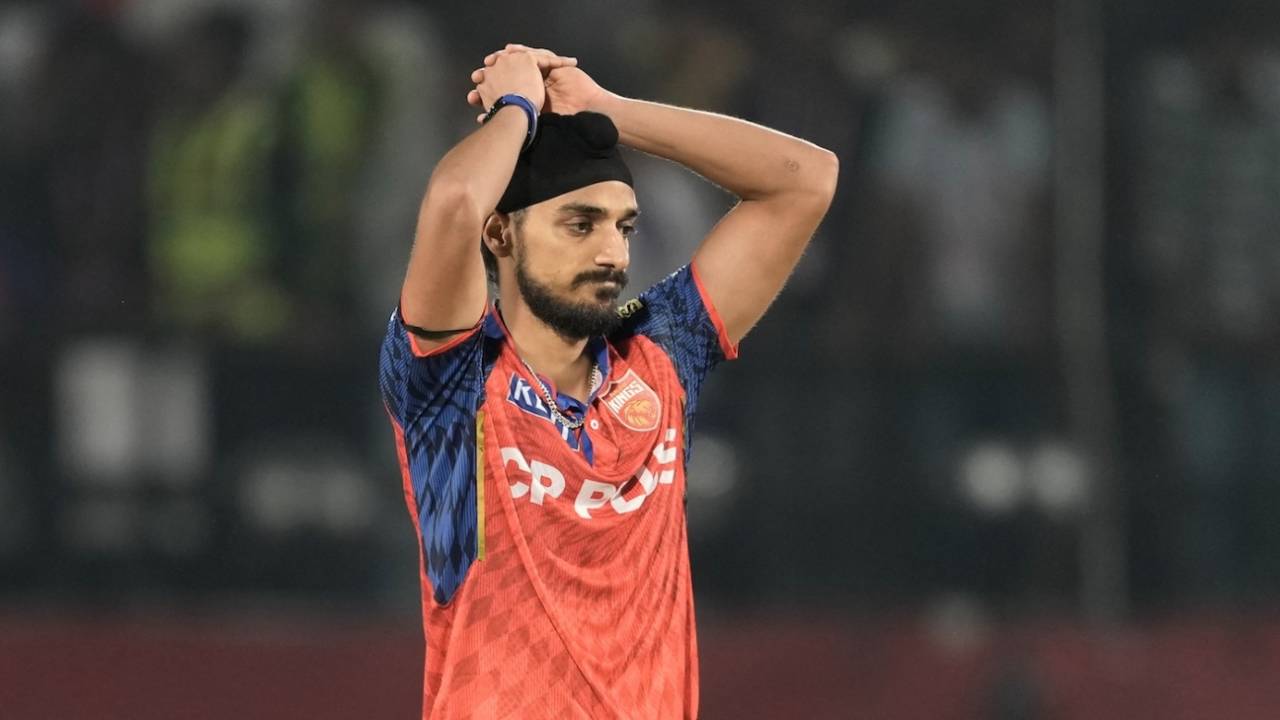
Arshdeep Singh, a left-arm pacer renowned for his death bowling prowess and ability to swing the new ball, has experienced a challenging IPL 2026 season. His performances for Punjab Kings (PBKS) have been below his usual high standards, coinciding with a period where the franchise experienced both fleeting successes and prolonged losing streaks. Even in a recent match where PBKS finally broke a six-game losing streak, Arshdeep’s contribution was notably poor, raising questions among cricket pundits regarding the root cause of his struggles.
A Dip in Form for the Punjab Kings Pacer
The numbers from the latest match against Lucknow Super Giants (LSG) starkly highlight Arshdeep’s difficulties. While LSG managed to score at an economy rate of 9.80, Arshdeep’s individual economy soared to an alarming 17.33, preventing him from even completing his full quota of four overs. This performance is a far cry from his previous displays, especially considering his impressive run at the T20 World Cup earlier this year.
During that global tournament, Arshdeep was an integral part of the Indian squad, often considered the second-choice fast bowler behind the formidable Jasprit Bumrah. His decent outing saw him clinch nine wickets from eight games with a respectable economy rate of 8.46, playing a crucial role in India’s trophy-winning campaign. However, this IPL season paints a different picture, with Arshdeep securing 14 wickets from 14 games at a considerably higher economy rate of 10.20. He stands as one of only two bowlers this season to concede over 500 runs, the other being Anshul Kamboj of Chennai Super Kings, who, despite conceding runs, has 21 wickets to his name.
Ambati Rayudu’s Assessment: The Critical Aspect of Lengths
Former Indian cricketer Ambati Rayudu offered a technical explanation for Arshdeep’s current struggles, focusing primarily on his bowling lengths. Rayudu believes that Arshdeep has deviated from his strengths and is employing an unsuitable strategy.
The Imperative of Full Deliveries and Yorkers
Speaking on ESPNcricinfo TimeOut, Rayudu emphasized, “I just think his lengths [are the problem]. He’s not someone who should be bowling a lot of short deliveries.” He further elaborated on the ideal approach for Arshdeep, particularly in critical phases of the game. “Even in the death, he should be bowling yorkers.” This advice underscores the importance of precision and exploiting Arshdeep’s natural ability to bowl full and straight, a skill that has previously yielded significant success.
Rayudu also noted that even with the new ball, Arshdeep’s fuller deliveries have proven more effective. “Whenever he has bowled full, except for the first ball which was driven through the covers, I don’t think his fuller balls went for so many runs as much as the short of length deliveries or the short ball.” This observation suggests a tactical misjudgment where Arshdeep might be over-relying on shorter balls that are proving to be expensive, rather than sticking to the lengths that have historically brought him wickets and contained opposition batsmen.
The Fading “Juice” and the Need to Compensate
A deeper dive into Arshdeep’s short-ball struggles led Rayudu to speculate on the pacer’s physical state. “He should be mindful of that because his short ball, he doesn’t have a great bouncer at the moment, maybe because of his body being tired or he doesn’t have the same juice as what he did a few months back.” This implies a potential reduction in pace or bounce, rendering his bouncer less threatening and easier for batsmen to dispatch.
In light of this, Rayudu’s counsel for Arshdeep is clear: adaptation is key. “But he definitely has to compensate. If he has to overcompensate, he needs to be full.” This highlights that if the physical attributes that once made his short ball effective are currently diminished, Arshdeep must pivot his strategy towards full, accurate deliveries to maintain his wicket-taking ability and control the flow of runs.
Mark Boucher’s Perspective: The Inevitable Toll of Fatigue
Former South African wicketkeeper and coach Mark Boucher offered an alternative, yet complementary, explanation for Arshdeep’s dip in form, pointing towards the strenuous demands of modern cricket and player fatigue.
Post-T20 World Cup Exhaustion
Boucher posited that the relentless schedule, particularly after a major tournament like the T20 World Cup, might be catching up with the young pacer. “I think it’s just being tired [after the T20 World Cup] and this month being the IPL, and he had to play in this. That’s the reason why he’s like that,” Boucher stated. He stressed that this is a natural consequence of continuous high-intensity cricket, a common challenge for players across the globe.
Crucially, Boucher dismissed any notion of a decline in skill or talent. “I don’t think it’s got anything to do with his skill or his talent. At some stage, it [the fatigue] has to catch up with the players. It’s just, it’s natural.” This perspective suggests that Arshdeep’s current struggles are not indicative of a long-term problem with his bowling ability but rather a temporary dip caused by physical and mental exhaustion, a common phenomenon in an unforgiving cricketing calendar.
The Burden of Consistent Selection and Over-Trying
Boucher also touched upon the unique pressure faced by Indian domestic players in the IPL compared to their overseas counterparts. While international players often have the luxury of rotation or being rested due to squad depth, Indian talents like Arshdeep are almost guaranteed a spot in the XI, regardless of form or fatigue. “The one thing about him [is that] he knows that he’s going to be playing. It’s not like he’s an international [overseas player] where you’ve got quite a few different options and you can rest players here and there. He has to play.”
This constant expectation to perform, coupled with the inability to take a break, can lead to players trying too hard, potentially overcomplicating their approach. Boucher observed, “I think that’s where maybe he needs to back his skill set as well. I think that he’s trying too hard with the new ball to take the ball both ways.” This ‘over-trying’ can result in a loss of rhythm, accuracy, and ultimately, effectiveness, as the bowler attempts to force things rather than relying on their natural game.
The Road Ahead: An Opportunity for Redemption
Regardless of whether the primary issue is tactical or physical, as Boucher pointed out, Arshdeep Singh’s presence in the Punjab Kings’ playing XI remains almost certain for any remaining games, which are contingent on other results. This continuity, despite his current form, offers him at least one more chance to rectify a season that has largely veered off course. It is an opportunity for a talented bowler to reflect on the expert advice, manage his physical state, and rediscover the form that once made him India’s second-best T20 pacer. The cricketing world will be keenly watching to see if Arshdeep can make the necessary adjustments and finish the IPL 2026 season on a stronger note.