Ramiz Raja Slams Mohsin Naqvi’s PCB After Bangladesh Test Whitewash
The Bangladesh Whitewash: A New Low for Pakistan Cricket
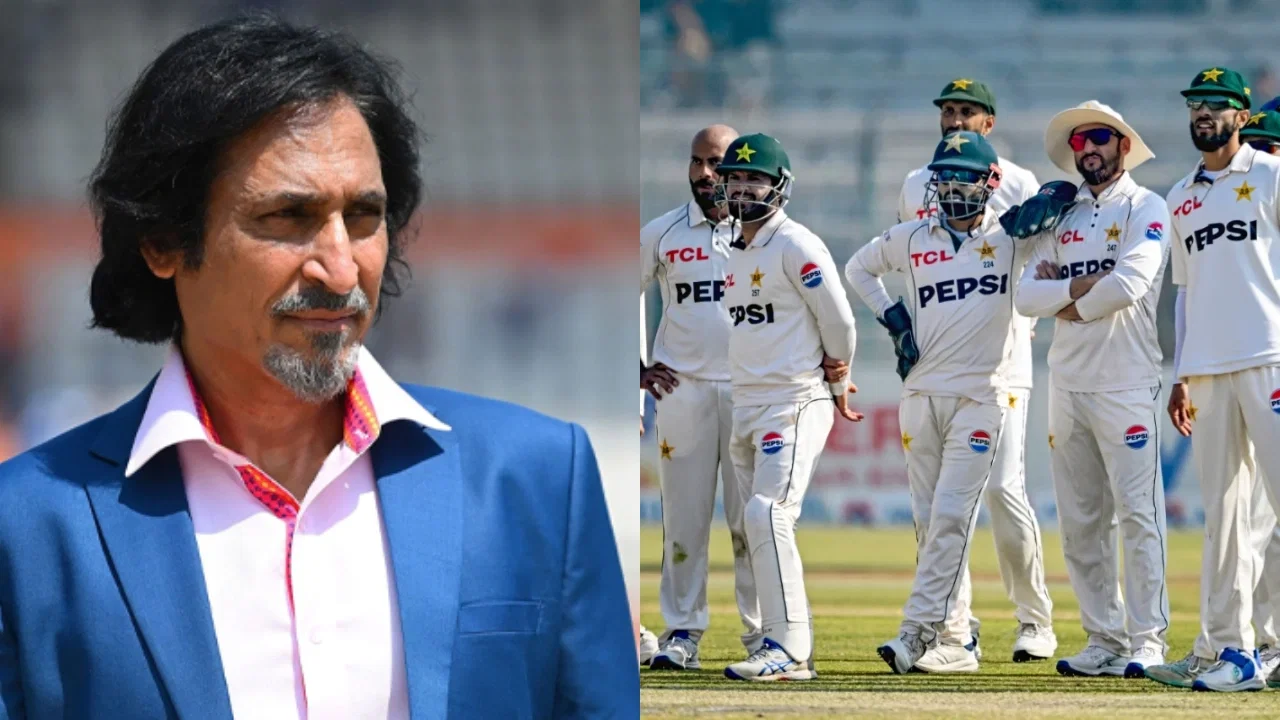
Pakistan cricket has hit another historic roadblock. The recent two-match Test series against Bangladesh ended in a shocking 0-2 whitewash, leaving the Men in Green facing heavy criticism and an existential crisis. Bangladesh outclassed Pakistan in both matches, exposing deep-rooted vulnerabilities in the team’s tactical execution, leadership, and overall structure. As fans and pundits demand answers, former Pakistan captain and international commentator Ramiz Raja has voiced his extreme frustration, launching a scathing critique against skipper Shan Masood and the Mohsin Naqvi-led Pakistan Cricket Board (PCB).
Ramiz Raja Questions Shan Masood’s Leadership and Selection Choices
Following the humiliating series defeat, Ramiz Raja did not hold back. He pointed directly to repetitive tactical errors and questionable selection decisions as the primary reasons behind the team’s continuous decline. According to Raja, the team has repeatedly failed to learn from its past blunders, keeping them trapped in a cycle of mediocrity.
“We have to bring some changes. How many times will you bounce back? How many times will you stand up again? Because the mistakes are the same,” Raja remarked. He expressed serious doubts about Shan Masood’s ability to lead the side forward, specifically targeting his squad selection and playing XI choices. “The problem with Shan Masood is that the way he picks, playing 11, I can’t see how he will win,” the 63-year-old former cricketer added, highlighting a fundamental disconnect in the leadership’s vision.
The fallout from this embarrassing series defeat has already triggered significant leadership changes, with reports confirming that Shan Masood has resigned as Pakistan’s Test captain following the Bangladesh humiliation.
Individual Agendas Over Team Strategy: The Sylhet Chase Breakdown
To illustrate the team’s tactical bankruptcy, Ramiz Raja pointed to the second innings chase at the Sylhet International Cricket Stadium. Chasing a daunting target of 437 runs to level the two-match series, Pakistan’s batting lineup failed to deliver a cohesive team effort. While key players like Shan Masood, Salman Ali Agha, Babar Azam, and Mohammad Rizwan made notable contributions on the scoreboard, their efforts were ultimately in vain as Bangladesh secured a 78-run victory.
Rizwan was the standout performer with a fighting 94-run knock, but Raja argued that the batting performances felt more like individual consolidation rather than playing for the collective team cause. He specifically criticized how the tail-enders were managed while Rizwan was at the crease.
According to Raja, the lack of a clear strategy to protect the lower-order batsmen allowed Bangladesh’s bowlers to exploit easy targets and trigger a late-innings collapse. “But if I am the captain, I will see who will be my match winner. Who will outdo Shanto? Or who will bat well against Naheed Rana? For example, when Rizwan was batting, he was playing with the tail-enders. It felt like it was his individual plan. It’s not the team’s plan to protect the tail-enders,” Raja explained.
Ramiz Raja’s Ultimatum to Mohsin Naqvi and the PCB
The critique was not limited to the players on the field. Ramiz Raja turned his sights to the administrative level, calling on PCB Chairman Mohsin Naqvi to halt proceedings and perform a thorough audit of the entire cricket setup. Raja believes that the board needs to take a step back and reconstruct a fresh, viable plan to rescue the national team from its current slump.
Raja posed a series of hard-hitting questions to the PCB leadership, demanding accountability across all departments:
- Are the players operating individually or collectively? Raja questioned whether the team environment is fostering personal milestones over collective victories.
- Is the bench strength being utilized effectively? He raised concerns about whether the right players are waiting on the sidelines without getting proper opportunities.
- Are the big names delivering results? Raja questioned how long underperforming star players would continue to receive backing despite failing to produce match-winning performances.
- Where lies the root cause? Is the issue primarily with the batsmen, the bowlers, the captaincy, or the overall team atmosphere?
“Look at the situation. What’s wrong? Is it because of the batsmen? Is it because of the bowlers? Or is it because of the captain? Which players do you have on the bench? Are they being used or not? What’s the atmosphere? What’s the environment? Are the players operating on an individual level or on a collective level? And are the big names giving you results or not? And how long do you have to run them?” Raja demanded.
The Road Ahead: Deconstructing and Rebuilding Pakistan Cricket
The 0-2 whitewash against Bangladesh has exposed systemic flaws that cannot be ignored any longer. Ramiz Raja’s explosive remarks serve as a wake-up call for the PCB and the entire cricketing fraternity in Pakistan. With Shan Masood stepping down from the captaincy, the PCB faces the monumental task of not only finding a new leader but also restoring discipline, building a cohesive team plan, and addressing the toxic culture of individual-centric play. Only a complete, honest reconstruction can steer Pakistan cricket back to its former glory.